
Elise Rodman
[Ringmaster’s voice] “Ladies and gentlemen, boys and girls, children of all ages… welcome to The Greatest Show on Earth!” This is the opening line for every Ringling Bros. circus act, and I’m not sure about you, but I get the chills when I recall this iconic opening recital. Even now, I can remember the feeling of magic in the air, the anticipation of seeing exotic animals perform in unison, flashing lights, booming voices, and all of the many bright colors held under the massive striped tent. These are sentiments from my childhood that will forever be engrained in my senses when these words are spoken. Unfortunately (or maybe fortunately), my generation may be the last to have this experience. For over 30 years now, PETA (People for the Ethical Treatment of Animals) has been protesting the Ringling Bros for their treatment of animals, calling it “The Cruelest Show on Earth.” PETA had exposed them for their abuse of baby elephants that they used in the process of “breaking” or training them. Although the Ringling Bros have some of the cruelest training methods, animal abuse is not a new aspect of the circus, it merely has just received a lot of attention in recent years. For those that have grown up going to the circus as children and then bringing their own children to it, the negative attention that the circus has received in recent years is a tragedy. Especially for circus performers or those who grew up around it, the thought of circuses closing breaks their hearts. Some of those performers and friends have actually voiced their memories, opinions, and experiences with the circus in the “Big Top” archive on the Oklahoma State Oral History Collections page. The magic that comes with a circus show derives from a rich culture and close-knit environment of circus performers and cannot exist in the traditional forms that those in this archive, along with many other Americans, expect without the exploitation of animals.
The first thing I learned about this archive was that The Big Top was not actually a circus itself; “Big Top” is just a word for the large tent that circuses put up to perform under, so it merely stood for all circuses that settled in a small town called Hugo during its winter off-months (“About the Collection”). Hugo is located in the southeast part of Oklahoma and is so famous for its involvement with the circus that it has actually been nicknamed Circus City, USA (“About the Collection”). This particular archive was put together by the Oklahoma Oral History Research Program with the intentions of “preserv[ing] the voices and experiences of those involved with the work culture associated with Hugo, Oklahoma’s tent circus tradition” (“About the Collection”). The phrase “preserv[ing] the voices” caught my attention for some reason and I became intrigued with what exactly that meant. Why did they have to be preserved? I began digging through the archive, determined to find out.


I found the simple but unimpressive archive in Oklahoma State’s archive collection. There were five links on the side menu of the archive, so naturally, I clicked on the “About” tab to get a better sense of what I was about to jump into. Words like “tradition,” “culture,” “symbiotic relationship,” and “entertainment” immediately stuck out to me. As I read, I learned about the unique, symbiotic relationship that the circuses and town had; the circus provided financial and economic support to the town, and the town provided resources and supported the circus and its performers (“About the Collection”). I had never really given thought to what the circuses did during their offseason, but I found it fascinating that they had a home base town that truly embraced them. Hugo has housed numerous circuses during the winter months, but only three continue to call it home today. A quote that stuck out significantly to me was: “The circus is about creating illusion, stimulating the imagination, and providing family entertainment. At the heart of this project is capturing information about the occupations that help define it” (“About the Collection”). I was intrigued by the last sentence so my mouse jumped over to the “Big Top Video Segments” link, soon pulling me into an interview with a woman named Barbara Miller.
Barbara is a 65-year-old, white woman born in Smith Center, Kansas (“Video Segments”). She has a soft, grandmotherly voice and throughout the video, she did an excellent job of persuading me that the circus environment was magical and the best possible place to be raised. She claimed it was “a wonderful place to raise children” because the community was both a protective and free environment for them to grow up in; having been raised in the circus herself, she loved that she was able to travel so much, seeing nearly all of the United States including cities and national parks (“Video Segments”). Finally, she had the pleasure of spending her offseason in Hugo, OK, a community that supported the circus and gave her a hometown to have roots in. Between traveling nine months out of the year, and settling down in a small town for the other three, she had the best of both worlds. From her perspective, the circus really didn’t seem all that bad. In fact, she made it sound ideal – fun, educational, cultural, and unique. I wanted some more perspectives on what life inside the circus was like – after all, it sounded as magical as they front it to be – but after viewing a couple other videos on that page and finding little of interest, I decided to read through some of the interview transcripts that were available on the “Big Top Interviews” page. I hoped that some of the transcripts would contain information about the training or treatment of animals that is the source for some of the tricks they perform.
One of the greatest joys of attending the circus is seeing the lions, tigers, and elephants perform tricks such as standing on balls, jumping through hoops, or standing on their heads, but these are not normal or enjoyable for the animals. The only reason that they do these tricks is because they are afraid of what will happen if they don’t perform; behind the scenes, animal trainers whip, beat, and “break” the animals, so that on stage, the animals will do what they want out of fear (PETA). This behind the scenes “training” has been exposed through pictures and videos by organizations like PETA, which over the past few decades have been raising awareness about animal mistreatment within circuses, especially targeting the recently closed Ringling Bros. These popular videos are scattered over PETA’s website. One page on explains the various stages that elephants are beaten: as a baby, they are broken, as an adult, they are whipped and beaten before and after the show, all behind closed doors so the public doesn’t see.
I was intrigued to see what those on the archive had to say about animal cruelty. On the “Interviews” page, I decided to read about Charles Baggett since he was the first interview on the page. Charles grew up in Hugo but wasn’t actually a circus kid himself. His family owned a business in Hugo that supported the various circuses that would pass through Hugo, so he became somewhat familiar with what the circus life looked like (Nykolaiszyn, “Oral History Interview with Charles Baggett” 4). He went on to say that the circus got a bad rep from most people just because most people didn’t ever get to see what was behind the scenes (5). This seemed to be the case with the circuses considering how much hate they’ve received when according to this archive so far, they didn’t seem all that bad. I continued reading and nearly decided to ditch this interview after nothing caught my attention, but then near the end of the transcript, the acronym PETA popped out at me. Baggett said that he had written to PETA because he felt that they were downgrading circuses for their treatment of animals, particularly elephants (24). PETA had just found a case of animal abuse in one of the circuses, but his argument was that it was simply only after two years of traveling with and following the circus (24). In his opinion, PETA making such a big deal of this and cast all circuses in a bad light, which wasn’t fair to them. He had a point – just because there was one bad incident doesn’t mean that they needed to completely tear apart all circuses.
I decided to do a little bit more investigating, because from what he said, PETA did overreact, but I also was keeping in mind that they had also just shut down Ringling Bros only nine years after that, so they must have had a decent argument. I pulled up PETA’s website to see what they had to say about it. I knew that this interview was done in 2011 so I looked on PETA’s “Milestones” page to find anything I could about circuses that would have occurred in or before 2011. The only articles I found were titled “USDA fines Ringling Bros. and Barnum & Bailey Circus $270,000—the largest fine ever paid by an animal exhibitor—for violations of the Animal Welfare Act” and “PETA blows the lid off Ringling Bros.’ violent training methods when a whistleblower shares photographic evidence from Ringling’s training compound” both occurring in 2011 (“PETA’s Milestones”). These titles astounded me. Baggett’s description of what PETA found did not do any justice to what they claimed to have found; he seemed to have watered it down significantly. As I continued through several other interviews, I came across other defenses by circus performers that their animals were treated well. Mike Moore said, “There is animal abuse, just like there are people that abuse their dogs… [but] you’re going to take care of those [animals] because your livelihood depends on them… I did not see a whole lot of animal abuse over the years” (Nykolaiszyn, “Oral History Interview with Mike and Martha Moore” 40) In another interview, a woman named Irene Kellogg said, “but for animals, we take good care of our animals” (Nykolaiszyn, “Oral History Interview with Carol Rawls Mendez and Irene Kellogg” 53). Her friend, Carol Mendez, chimed in saying, “Right. They make our living; why would we abuse them?” (53). I was utterly lost and confused by the two contrasting perspectives; it almost felt like the archive and PETA were talking about two completely different things from the way animal cruelty was presented.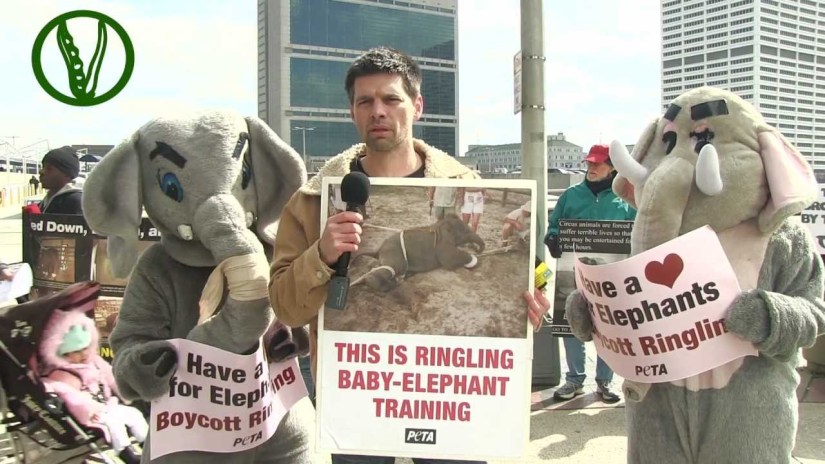
Some people might argue that animal cruelty is just now becoming a problem or even that it’s just now being discovered; I would argue that neither of these is the case. The only thing that has changed in the last few decades is our love for animals and understanding about how they should be treated. 50 to 100 years ago, animals were being treated more or less the same; the difference between now and then is that animal rights weren’t at the top of the list of problems to be dealt with back then. Now, with millennials’ increasing demand for animal rights, it has been a “discovered” problem. And although circuses haven’t yet been completely destroyed for their psychological abuse of animals, my guess is that this will come soon. New studies of animals such as elephants and whales have shown that they are in fact tremendously depressed because of their captivity and being forced to perform acts that are unnatural.
There is a tension that has been created between the two arguments, saying that either circuses should be shut down completely (like PETA with the Ringling Bros) or that circuses really don’t treat their animals that badly and that as long as there is no animal abuse, the historical, rich tradition of circuses should stay in business. I would argue that neither of these should happen. The more I began researching in the archive, the more I realized what an incredible resource it was. With all of the negative attention it had been receiving, this was one of the only places actually preserving the traditional idea of a circus. The circus has been a beautiful, unique kind of artwork for generations, brought together by a close-knit community of people and animals who traveled, lived, and worked together. Suddenly, with all of the newfound animal cruelty, all of that has been forgotten. The circus is part of America’s history. Although it is easy to make hateful accusations of all circus history, it’s not entirely fair either, because animal rights hadn’t really been established or understood yet. I hate for circuses to be shut down or the art of it lost in the desire for progress. I have come to the conclusion that the circus is closing because of animals; if it weren’t for them, Ringling Bros wouldn’t have closed and we would still have “The Greatest Show on Earth.” Obviously, the animals are not in a position to change this, but simply the way that humans have forced their relevance in the circus has caused animals to be problematic under the big top. People have made animals a vital part of the circus, to the point that many people believe circuses can’t exist without animals. I do not believe we should continue using animals in our shows because of how they are trained and used for human entertainment, but I think that we should consider socially redefining what a circus is – maybe in the way Cirque du Soleil has already started doing this.
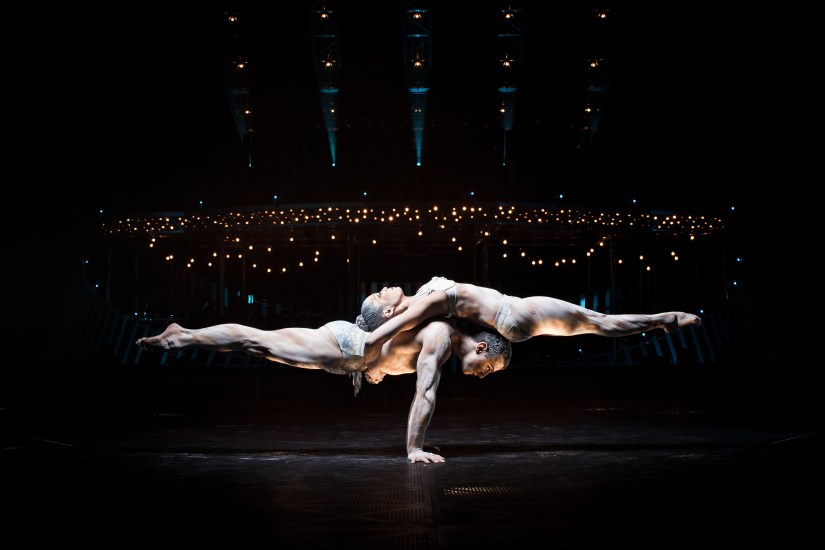
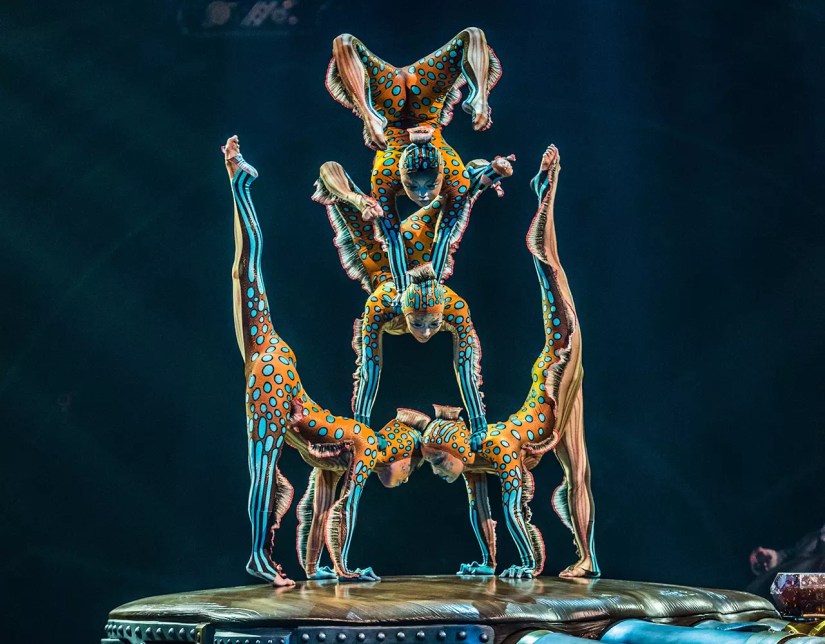
A new kind of circus sprung up in the 1980s in Canada known as Cirque du Soleil. It began being known as a contemporary circus with its emphasis on theatrical performances and lack of animals. Most people tend to think of circuses as needing to have animals in them, but the definition of a circus is “an arena often covered by a tent and used for variety shows usually including feats of physical skill, wild animal acts, and performances by clowns” (“Circus”). Animals are mentioned in there, but by no means required in order to establish something as a circus. Cirque du Soleil latched onto this “anima-free circus” idea. Martha Moore from the archive commented, “I think, as humans, we just love live entertainment. I think it’ll just kind of morph and change, and I don’t think it’s going to be a whole lot different a hundred years now. I think there will probably be a virtual circus at some point” (Nykolaiszyn, “Oral History Interview with Mike and Martha Moore” 40). She even recognized that circuses have the potential to change based on what people want, and how we define a circus (40). Circuses are dependent upon the magic that it is known for, which is derived from the lifestyle of those in the circus. Traditional circuses had a much more family-oriented lifestyle like those in the archive described, where the animals predominantly brought the magic to the show. Contemporary circuses like Cirque du Soleil rely on people to bring life and character to the show, making it necessary for these people to devote every ounce of their life – diet, body, mind, and lifestyle – to each performance. So as animal-free circuses like Cirque du Soleil, Cirque Italia, and Circus Vargas come into style, we can expect that the traditional circus the Big Top archive recognizes will become less and less popular.
Although this archive may not acknowledge animal rights in the way that many of younger generations might hope for it to, it presents a historically accurate picture of what circus life used to look like. The intention of circuses in the past was never to lie to people about how much they loved their animals – they truly did love them – their intention was to create a magical place for people of all ages. This magic, as many circuses realize, cannot exist without animals unless the community and culture of the circuses change. The circus used to be a portrayal of the American dream – a small, close-knit community where everyone got along and worked hard. Contemporary circuses require a different kind of hard work; actors must devote their whole being to their training in order to achieve the production of a magical show. With the newfound interest in animal rights, we should consider redefining what a circus looks like, emphasizing that circuses depend on the lifestyle of those in the circus to create the magic it instills in people. It is important to preserve traditional circuses because they have been something that has been part of many American’s childhoods as well as a rich part of this country’s culture, but it is also just as necessary to continue to move forward and change with our society and its passions by attending animal-free circuses. We need to preserve the history of the circus tradition by eliminating animals for entertainment within this establishment and socially redefining what a circus is so we can continue reveling in the beautiful art and magic of “The Greatest Show on Earth.”
Works Cited
“About the Collection.” Oklahoma State University Library, Oklahoma State University Library, 12 Aug. 2015, library.okstate.edu/oralhistory/digital/circus/about-the-big-top-collection/.
“Circus.” Merriam-Webster.com, Merriam Webster, www.merriam-webster.com/dictionary/circus.
Nykolaiszyn, Juliana, and Juliana Finchum. “Oral History Interview with Carol Rawls Mendez and Irene Kellogg.” Library.okstate.edu, Oklahoma Oral History Research Program-Oklahoma State University, dc.library.okstate.edu/digital/collection/circus/id/236/rec/13. Accessed 12 Dec. 2017.
Nykolaiszyn, Juliana, and Tanya Finchum. “Oral History Interview with Charles Baggett.” Library.okstate.edu, Oklahoma Oral History Research Program-Oklahoma State University, dc.library.okstate.edu/digital/collection/circus/id/83/rec/1. Accessed 11 Dec. 2017.
Nykolaiszyn, Juliana, and Tanya Finchum. “Oral History Interview with Mike and Martha Moore.” Library.okstate.edu, Oklahoma Oral History Research Program-Oklahoma State University, dc.library.okstate.edu/digital/collection/circus/id/366/rec/15. Accessed 11 Dec. 2017.
“PETA’s Milestones.” PETA, People for the Ethical Treatment of Animals, http://www.peta.org/about-peta/milestones/.
PETA. “12 Things Ringling Doesn’t Want You to Know.” PETA, People for the Ethical Treatment of Animals, www.peta.org/features/ringling-bros-elephant-cruelty/.
“Video Segments.” “Big Top” Video Segments, Oklahoma State University Library, 12 Aug. 2015, library.okstate.edu/oralhistory/digital/circus/big-top-videos.
Fall 2017
Elise is a student at Oklahoma State University. She is studying sociology and religion and will graduate in May of 2020. After graduating, she plans on moving back home to Boston and then overseas to do social work.
 archiveoklahoma.com